Bespoke Van Build Guide
A Beginner's Guide for UK Adventurers
Commissioning a bespoke campervan is incredibly exciting, but knowing where to start can feel daunting. From choosing a base vehicle to configuring the electrical system, the choices you make now will shape your future adventures. This guide breaks down the essential choices to help you build a van that fits your lifestyle perfectly.
The first step -
Choosing what size van
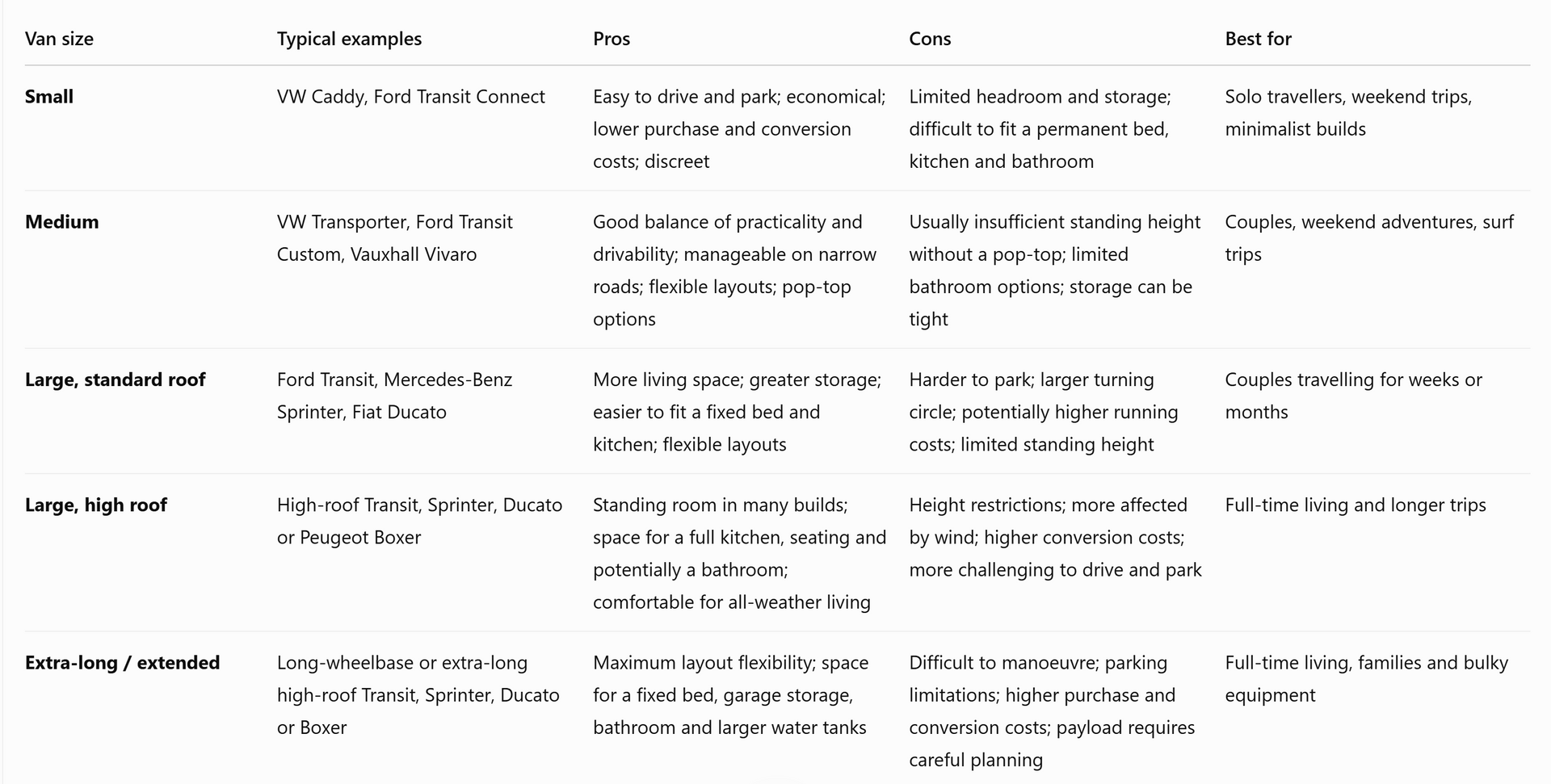
Your van size will have an impact on your layout options, where you can travel, and your overall comfort.
Primarily, it boils down to how you are personally going to use the van. Are you needing it to be your one and only vehicle, using it for commuting, but also camping or will it solely be used for specific camping trips.
Here are some questions to ask yourself:
- Is it just for you & your partner, or for a family? How many people does it need to seatbelt and sleep
- Do you want it to fit within a normal carparking bay
- Is it going to be your everyday vehicle, so perhaps compromising on its inside space so its easier to drive around
- Do you want to be able to stand up inside? If so do you want this to be a permanent high roof, or a pop top
- Are you into outdoor sports and need a big garage area to store it all, or perhaps a small van but prioritising clever storage?
These are just a few questions to get you started. Check out the Pros and Cons of different options below?
You've chosen your van
...What Layout will suit you best?
Now you have chosen which size van you want, what do you do with it?
Choosing a van layout is one of the biggest decisions in a campervan conversion. The option that best suits you will depend on how many people will use it, whether you want a full-time home or a weekend camper, how much storage you need, and whether you prioritise a permanent bed, a bathroom or a large living area.
You could firstly ask yourself:
How are you going to mainly use the space?
- If you have chosen a small van, you might mostly be using it to sleep in, so you want to prioritise the comfort of the bed and have outside cooking facilities
- Are you very sociable and often go away with friends so want to prioritise lots of seating e.g: have a U-shaped seating area
- Do you need a fixed, raised bed to fit bikes and other sporting equipment?
- Do you want flexible modular furniture options, allowing you to remove some of it, if at times you need to use it as a work van, or store extra gear like bikes etc.
How do you configure your sleeping and seating arrangements?
This depends on the type of bed you choose and what size van you have. If you have chosen a small van, you have the decision of whether you need or want a rock and roll bed. This is the most common choice if you need the extra seating, for instance if you have a family. However, if you don't need the extra seatbelts, then you have so many more options availble to you. Do you have a slide out sofa/bed instead? Do you have U shaped seating etc.
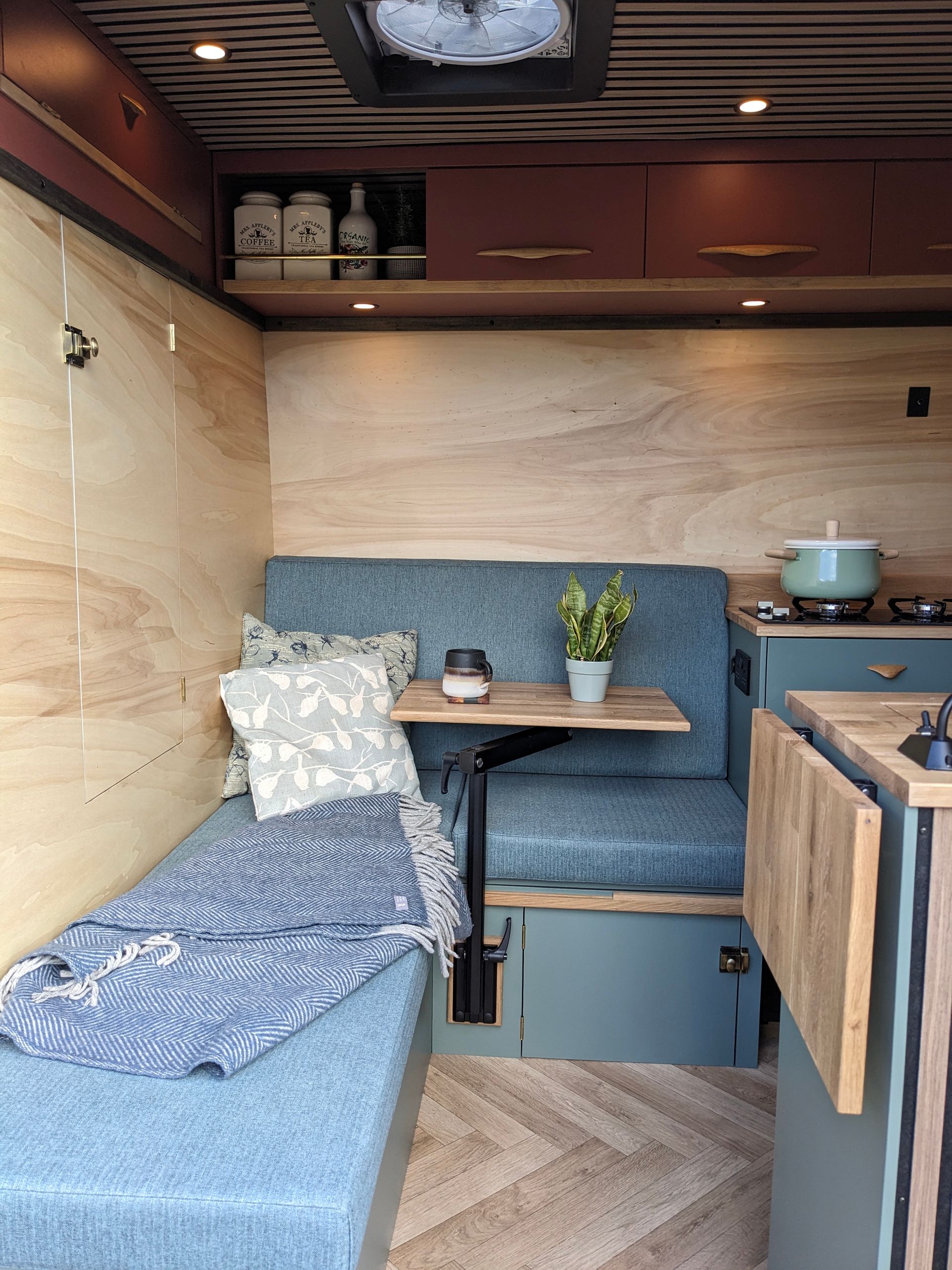
If you have chosen a large van, you may choose to have a fixed bed at the back to maximise the storage available. You then have a few differnt options of where the seating goes. I always like the seating to be opposite the sliding door so you can maximise the views. Others like to have a sliding table from under the bed with seats opposite one another making it perfect for eating at or playing games.
Or if you have a bigger budget, you may want to look at have a full size bed that can raise up, leaving you with a larger living space underneath. You might choose to have U shaped seating underneath this. But note, it will lower you ceiling dramatically, so you may want to look at an extra high roof.
What kind of table do you want and where?
A swivel one, one that pulls out from under the bed, one the folds up or slots into the floor.
The position of your seating may determine your options here.
Do you have the cab area open or closed off?
Do you utilise the cab area for extra space/seating, or close it off for added privacy and warmth?
Pros of having it open:
. It allows you to have swivel seats and opens up your living area.
. It provides you with a different seating configuration.
. Its an easier way to seat 4 or more people around a table
. It can make your van feel bigger
- Pros of having it closed off:
- The Cab area is hard to insulate and has a lot of windows, so it counteracts your insulation, letting a lot of heat in during hot days, and feels very cold when the temperatures drop
- Removing the bulkhead and replacing it with an insulated wall can make a huge difference to keep those temperatures more controlled.
- It can also provide you with more privacy, so people can't see it, and feel safer
- It can make it more secure, as if people break into the cab area, they might not be able to access the back.
- It prevents condensation build up on the cab windows, and also means you don't need to use thermal window covers so keeps you looking more stealth for wild camping
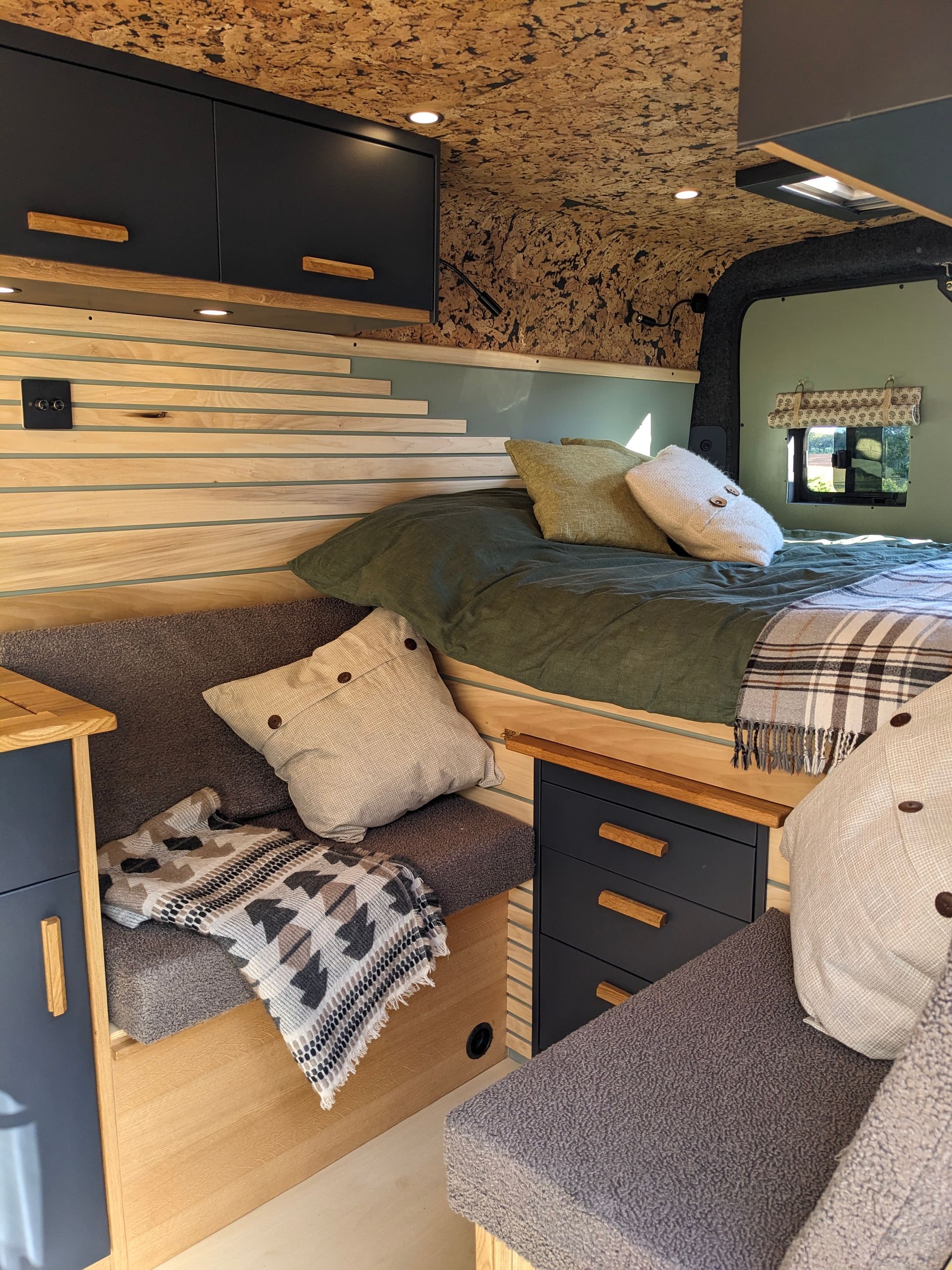
Layout one
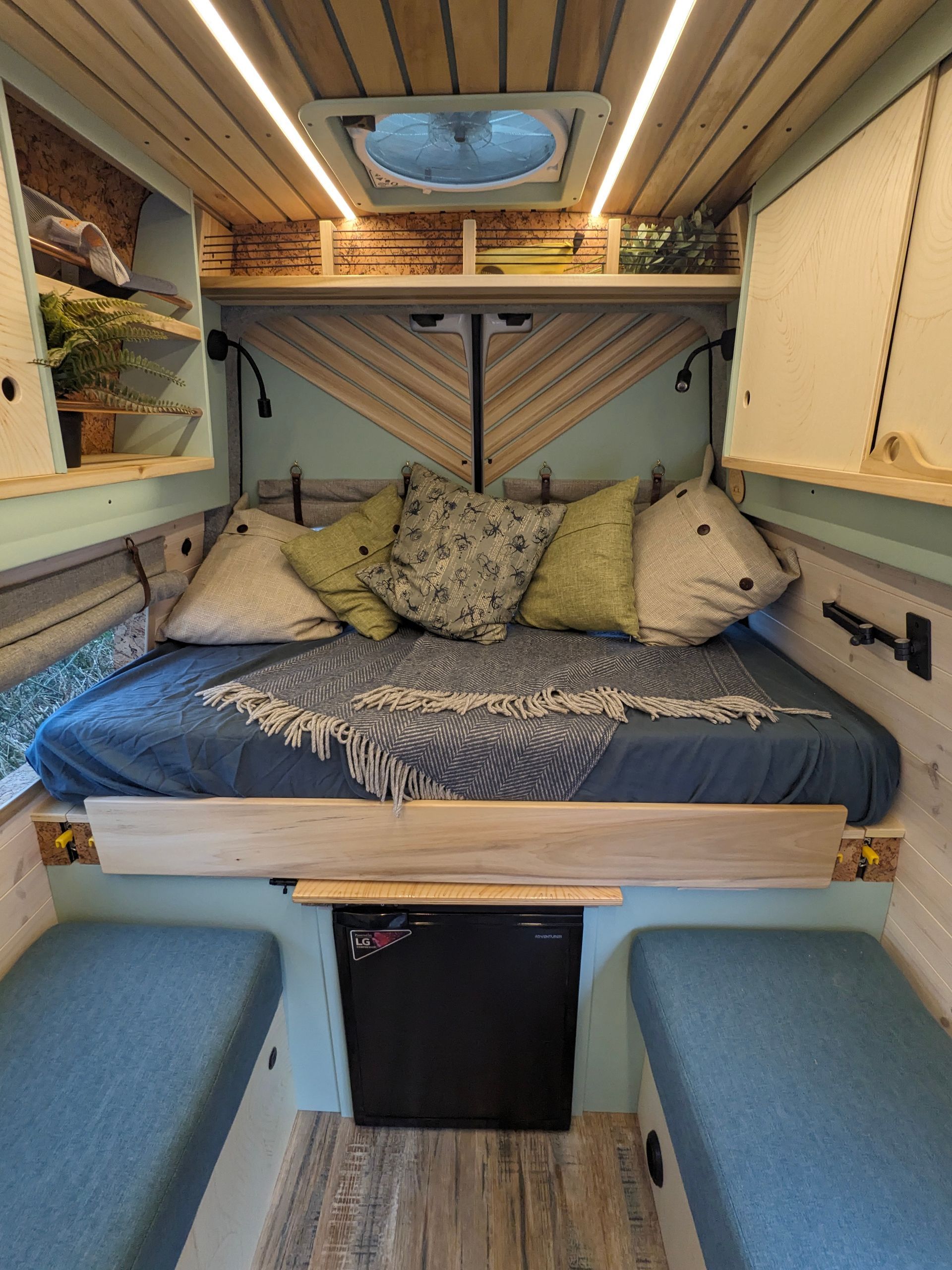
With a fixed bed at the rear, a kitchen behind the cab and opposing seats
with a pull out table
Things to concider:
- Bed is always ready to use
- Large storage area underneath for bikes, camping gear or outdoor equipment
- No need to rearrange cushions every night
- Allows a logical separation
between cooking and sleeping
- Smaller living and dining space
- If having this layout in a LWB Boxer or Sprinter, the transverse bed may be too short for taller people
- The kitchen gets the best view
- Less flexible if you want a large lounge
Layout two
With a fixed bed at the back, a nice large comfy L-shaped sofa behind the cab, that can also double up as another bed. The kitchen is then housed either side in the centre of the van
Things to concider:
- More storage capacity within the seating
- Keeps equipment out of the living area
- Higher bed can make climbing in and out less convenient, you don't have the seating next to the bed to help step you up, so careful planning in required of how you plan to get in and out of the bed
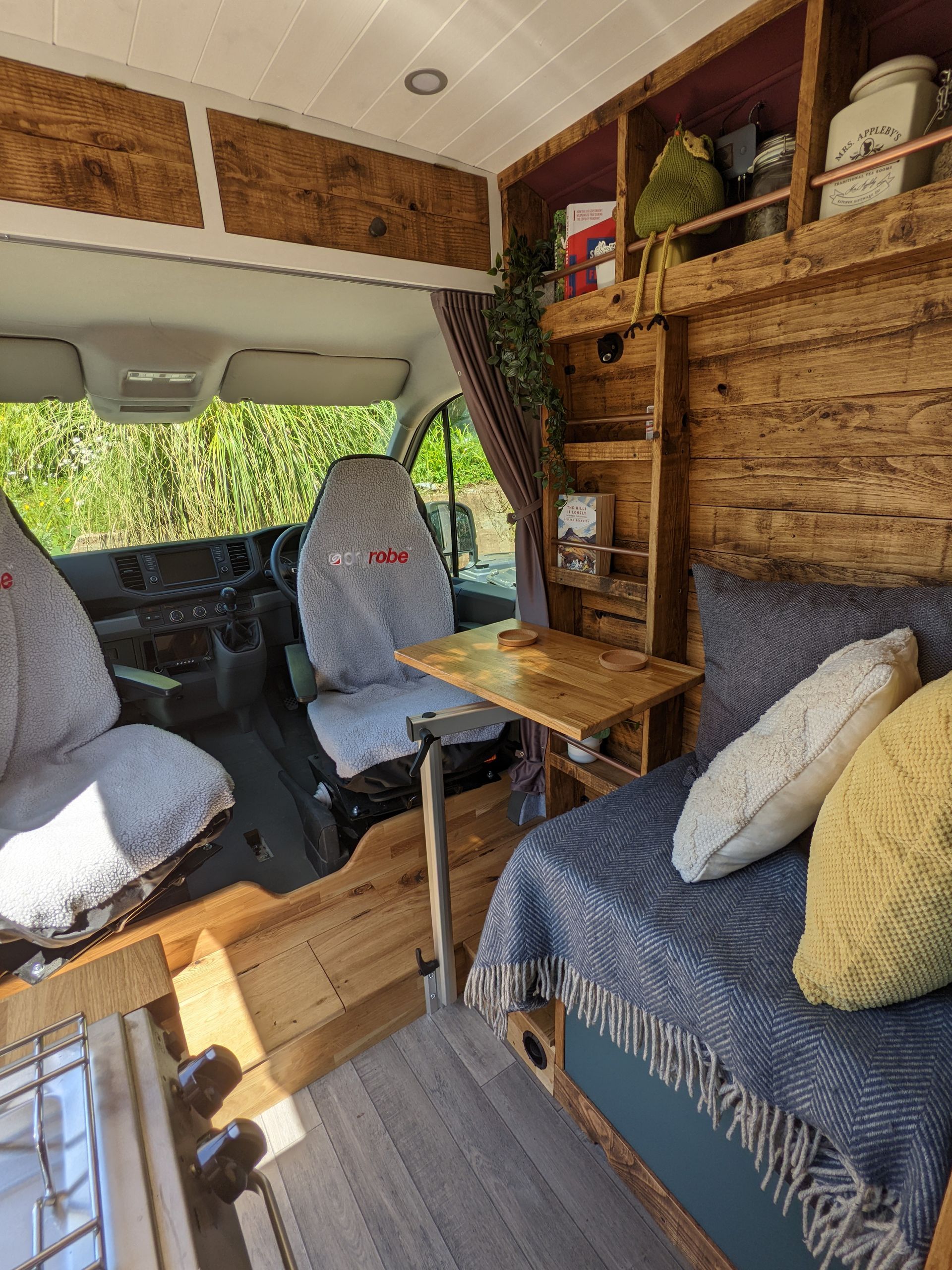
Layout three
Utilising the cab area, by opening it up and having swivel seats. This maximising the full length of the van, opening it up and make the van feel more spacious.
Things to condicer:
Please read above for the pros & cons
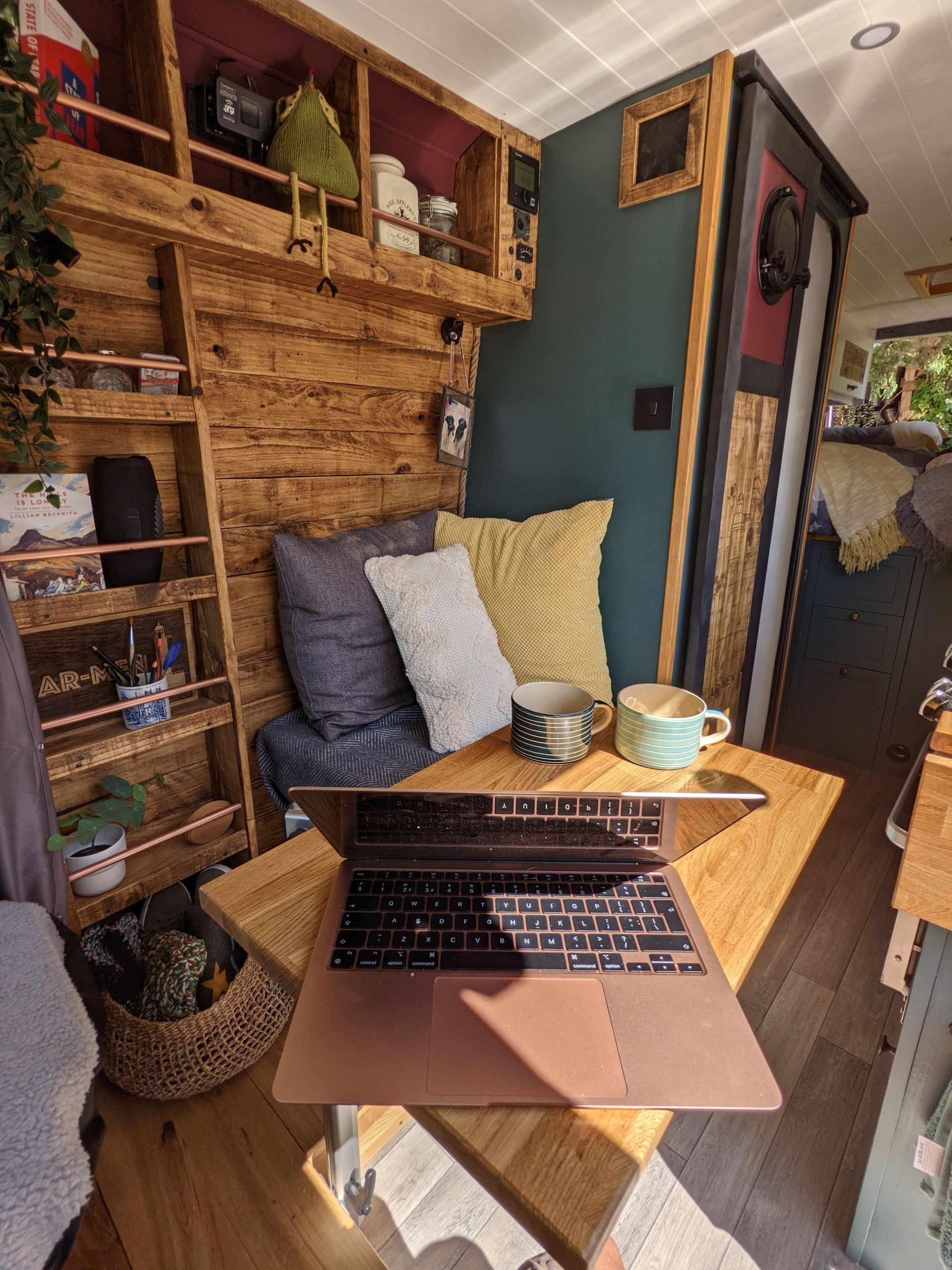
Layout four
The big bathroom debate! To have one or not to have one?
Things to concider:
The bathroom does take up a lot of space and is only really possible in a LWB Sprinter/Crafter size van. Unless you have a collapsible one. But this may cause problems with mold if not dried properly before storage.
You use a lot of water to shower, are you always going to have places you can fill your water tanks
They can double up as a great place to hang wet clothes or gear and run a heating duct in there.
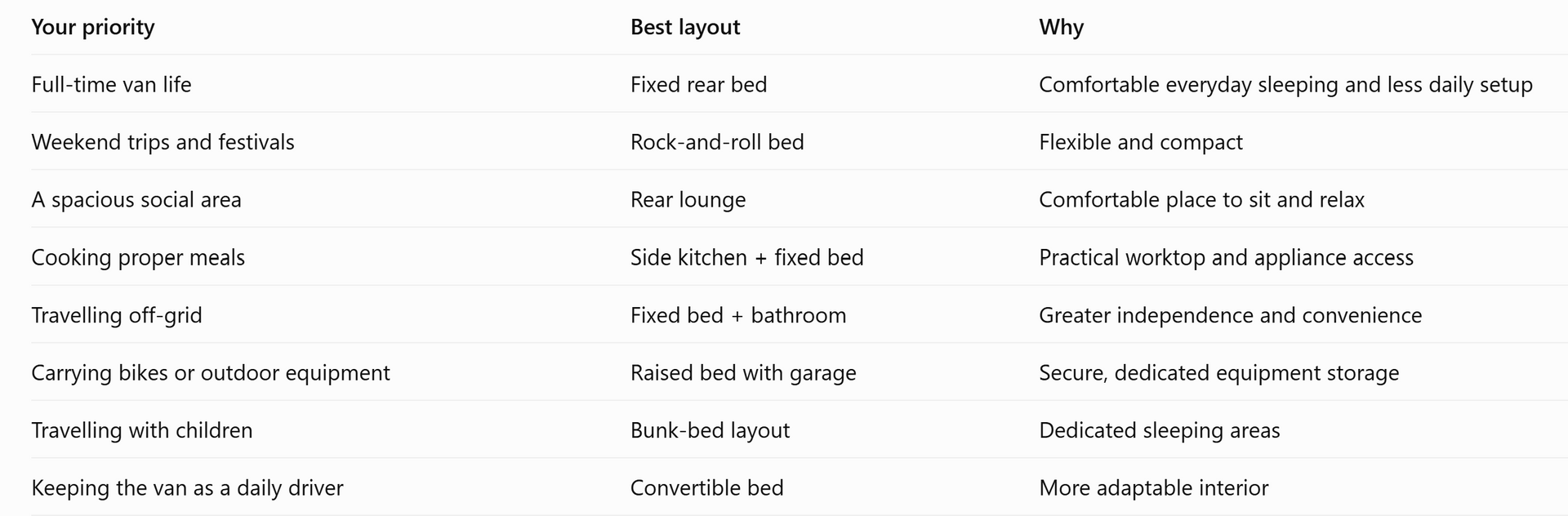
Quick comparison: which layout suits which lifestyle?
Small VS Large set-ups
A small campervan setup usually relies on a basic 12V battery bank (typically a 100Ah AGM or lithium battery) charged by your vehicle alternator via a DC-to-DC charger, while a large setup uses a massive 300Ah to 460Ah+ lithium battery bank paired with a 2000W–3000W inverter, high-output solar, and multi-source charging.
- Small Setup (Weekend / Minimalist):
- What it includes: 1 x 100Ah leisure battery (AGM or Lithium), a simple 12V fuse box, a DC-to-DC charger (charged while driving), LED lights, a water pump, USB ports, and a 12V compressor fridge. Optional plug-and-play units like a Bluetti or EcoFlow portable power station can also work.
- Why choose this: Ideal if you take short 2-to-3-day weekend trips, stay mostly on campsites with hookups, or move your van almost every day (which keeps the battery topped up via the alternator). It is light, budget-friendly, and very easy to understand
- Large Setup (Full-Time / Off-Grid / Heavy Appliances):
- What it includes: 300Ah to 500Ah+ of LiFePO4 (Lithium Iron Phosphate) batteries, a 2000W–3000W pure sine wave inverter/charger, heavy-duty DC-to-DC charging (e.g., 50A–60A), a roof solar array (300W–600W+), and an MPPT solar controller.
- Why choose this:
- Necessary if you plan to live in the van full-time, work remotely with laptops and routers, stay off-grid for weeks in cloudy weather, or run high-draw 240V appliances like induction hobs, air fryers, or hair dryers simultaneously
Are you Totally overwhelmed by what electrical setup you need?
What is an inverter?
Leisure batteries supply you with 12v DC power. This allows for USB charging ports or cigarette lighter points.
An inverter converts this 12v power into normal household 240v AC power. This allows you the ability to run appliances that require a 3 pin plug. This could be your laptop, or kitchen appliances like blenders & air fryers
What size inverter you need depends on the wattage of the appliance you want to run (how much power it will draw)
What size system do i need?
Is your van going to be use for weekend trips, or longer adventures?
Are you wanting to just charge a phone and have some low powered LED's, or are you wanting to run inverters and high powered electrical appliances such as air friers?
What size battery/batteries do I need?
This all depends on what it is you are wanting to run. Check out this useful Power Calculator on the left to work out how much power you will use
Then use the Battery calculator below to insert your daily energy use to give you an idea of what size batteries you'll need
Do I need solar and if so how much?
Solar is a fantastic way to charge your batteries and live "off grid" How much solar you will need will again depend on how much power you are needing.
We can work with you to help you design a perfect system that will work for you
How do the batteries get charged?
A DC-to-DC charger allows the batteries to be charged via your alternator while driving
Solar panels can also keep you batteries topped up via a smart MPPT controller that regulates the current and maximised the power stored from the sun
Interested in our services?
We’re here to help!
We want to know your needs exactly so that we can provide the perfect solution. Let us know what you want and we’ll do our best to help.